

Most site owners ask the same question when traffic stalls.
Should I fix my pages, or should I build more links?
The difference between on-page and off-page SEO answers that question.
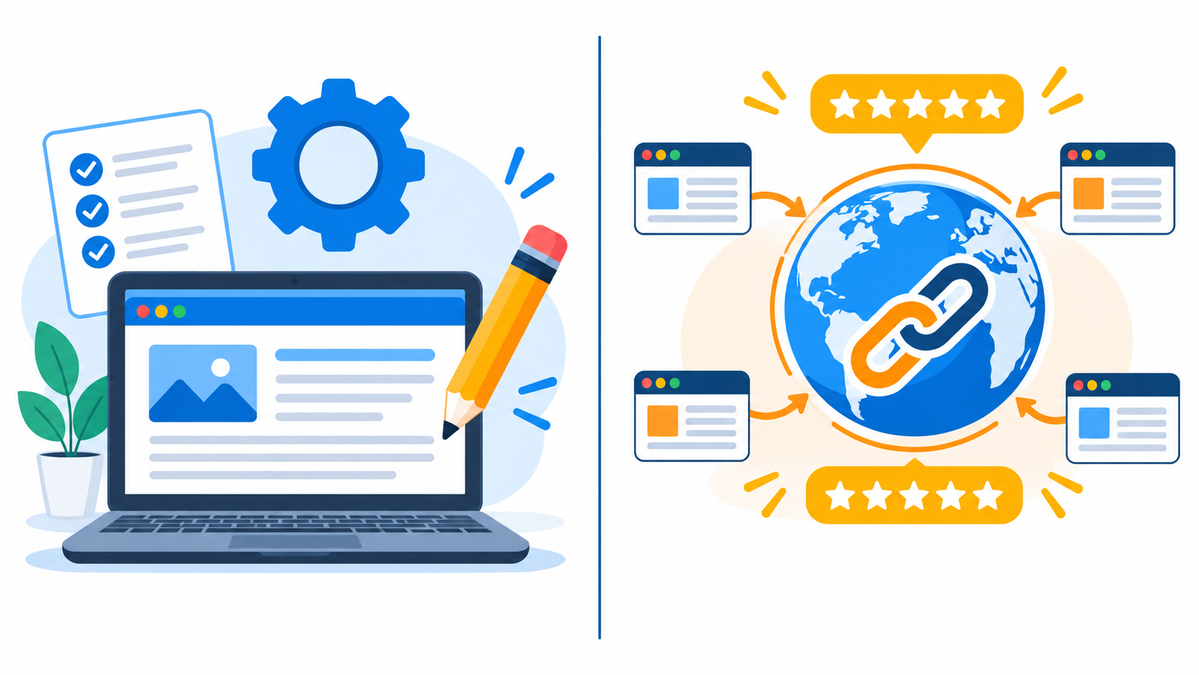
On-page SEO is everything you control on your own website.
Off-page SEO is everything that happens outside your website and tells Google your brand deserves trust.
Simply put, on-page SEO makes a page worth ranking, and off-page SEO proves it.
This guide explains the main difference between on-page and off-page SEO in digital marketing.
You will also get a simple method to decide what to fix first.
What Is SEO? (Quick Explanation)
SEO means search engine optimization.
It is the work of helping your pages appear higher in Google when people search for something you offer.
Google judges a page on two things.
- Is this page useful and easy to understand?
- Do other people and websites trust it?
The first question is on-page SEO.
The second question is off-page SEO.
A third layer, technical SEO, sits underneath both.
We will cover it shortly.
What Is On-Page SEO?
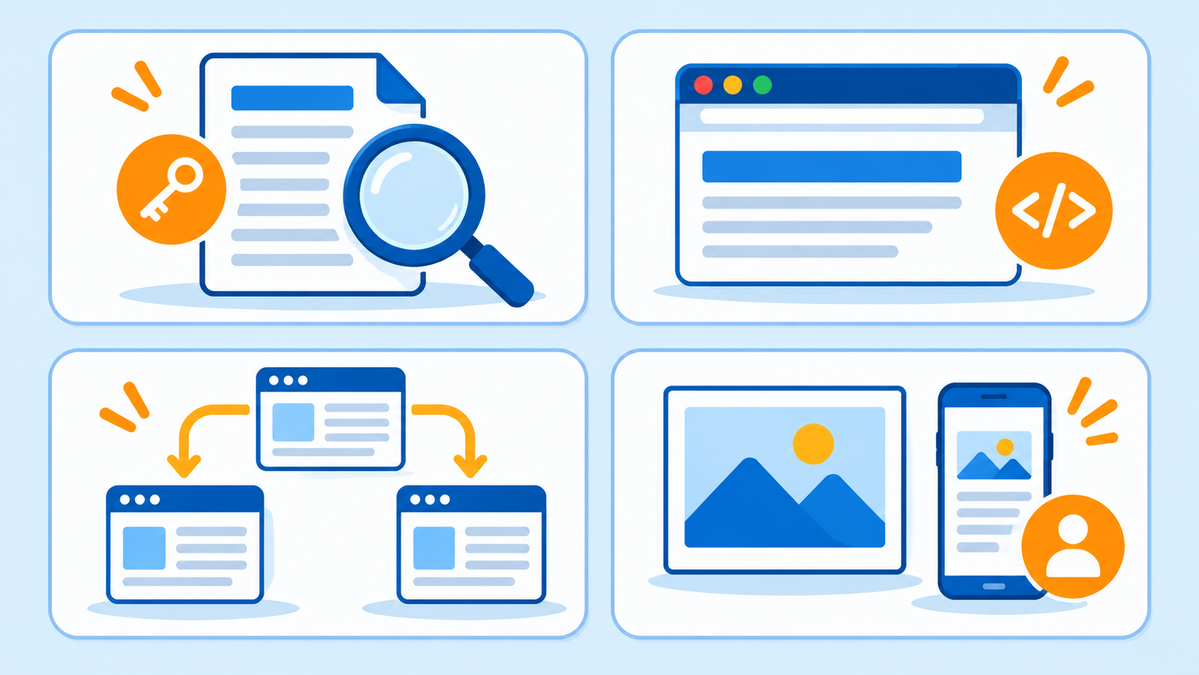
On-page SEO means improving the elements on your own pages.
You have full control here.
No one needs to approve your changes.
That is why I always start here with every new client.
Quality Content and Keyword Research
Content must answer the search better than the pages already ranking.
Start with keyword research.
Find out what people type, then check what kind of page Google shows for it.
If the top results are step-by-step guides, a sales page will rarely win.
Match the format first, then improve it.
Titles, Headings, Meta Descriptions, and URLs
These are the first things Google and users see.
- Title: Put the main keyword near the start.
- Headings: Use H2 and H3 to follow the questions readers actually ask.
- Meta description: Write it like a short promise, not a keyword list.
- URL: Keep it short and readable.
A good title gets the ranking.
A good meta description gets the click.
Site Structure and Internal Linking
Internal links tell Google which pages matter most.
They also pass strength from strong pages to weaker ones.
Most small sites ignore this.
In many audits, I find a good article with zero internal links pointing to it.
Google cannot rank what it barely notices.
Optimizing Images and User Experience
Compress images and write clear alt text.
Make sure text is readable on a phone.
Keep paragraphs short.
If users leave in five seconds because the page feels heavy or confusing, rankings usually suffer.
What Is Off-Page SEO?
Off-page SEO covers signals that come from outside your website.
You cannot control them directly.
You can only earn them.
Backlinks and Domain Authority
A backlink is a link from another website to yours.
Think of it as a recommendation.
One link from a respected site in your industry beats fifty links from random directories.
Relevance matters more than size.
Domain authority is a third-party score used to estimate link strength.
Google does not use that exact score.
Use it only as a rough guide.
Guest Blogging
Guest posting still works when done honestly.
Write for sites your customers already read.
Share something useful, not a thin article built only to place a link.
If an editor would not publish it without the link, it is not worth writing.
Social Signals and Brand Mentions
Likes and shares are not a direct ranking factor.
But social posts help people discover your content.
Some of those people own websites and blogs.
They are the ones who link to you later.
Also watch for unlinked brand mentions.
When a site mentions your business without a link, send a polite message and ask them to add one.
This is one of the cheapest link-building methods available.
Local SEO, Reviews and Online Reputation
If you serve a city, your Google Business Profile matters as much as your website.
Keep your business name, address, and phone number the same everywhere.
Ask happy customers for reviews.
Reply to every review, including bad ones.
Reputation affects both rankings and whether a buyer trusts you enough to call.
Off-Page SEO Techniques
These methods work in practice:
- Publish original data or a free tool that others want to cite.
- Contribute expert quotes to industry articles.
- Get listed in genuine industry directories.
- Build partnerships with local businesses and suppliers.
- Share your content where your audience already spends time.
Avoid bought links and link exchanges.
They create risk and rarely last.

What Is Technical SEO?
Technical SEO is how well search engines can reach, read, and store your pages.
It is not content.
It is not links.
It is the foundation.
Page Load Speed, Responsive Design, and Indexability
Check these three first:
- Speed: Slow pages lose visitors and rankings.
- Mobile layout: Google mostly judges your site by its mobile version.
- Indexability: If a page is blocked or not in Google’s index, nothing else matters.
Many people think a page is “not ranking” when it is actually not indexed at all.
Use Google Search Console to check before changing anything else.
On-Page vs Off-Page vs Technical SEO
Here is the simplest way to remember all three.
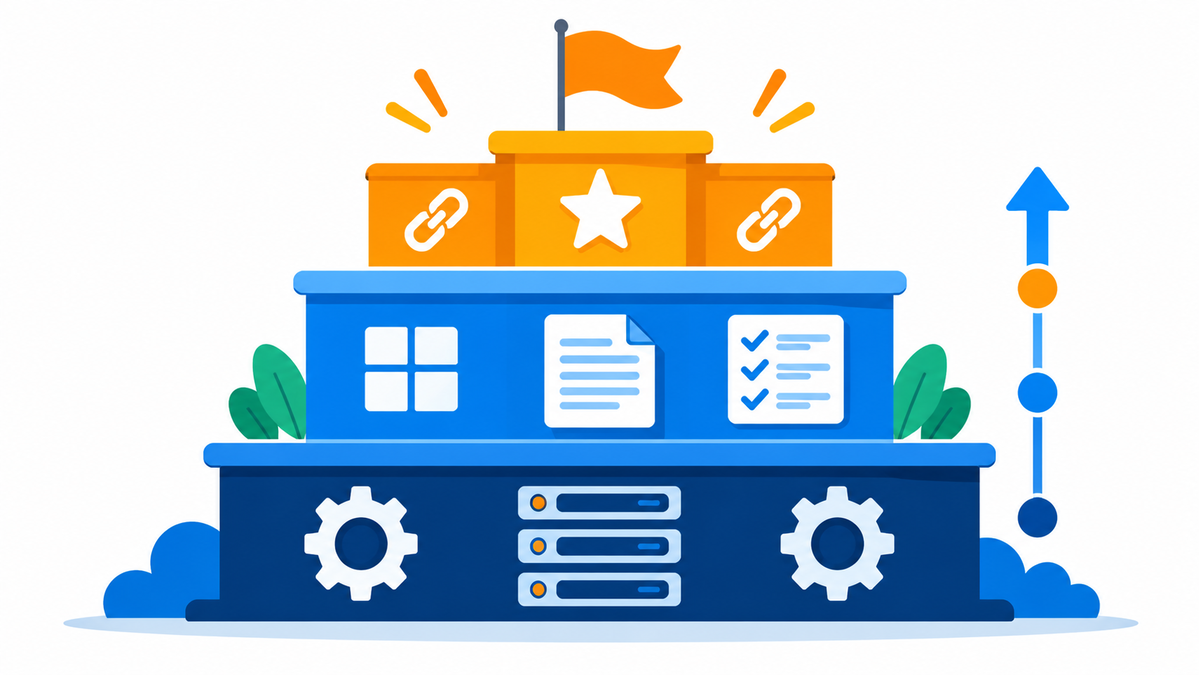
- Technical SEO lets Google enter the building.
- On-page SEO makes the building worth visiting.
- Off-page SEO convinces others to recommend it.
Fixing them out of order wastes money.
I have seen businesses buy backlinks for pages that were not even indexed.
The links did nothing.
Always work in this order: technical, on-page, then off-page.
On-Site vs Off-Site SEO: Is There a Difference?
No.
Many people use “on-site” and “off-site” to mean the same thing as on-page and off-page.
Some use “on-site” to include technical work across the whole website.
For rankings, the meaning is almost identical.
If a course or tutorial uses either term, you now know both mean the same idea.
Difference Between On-Page and Off-Page SEO (Comparison Table)
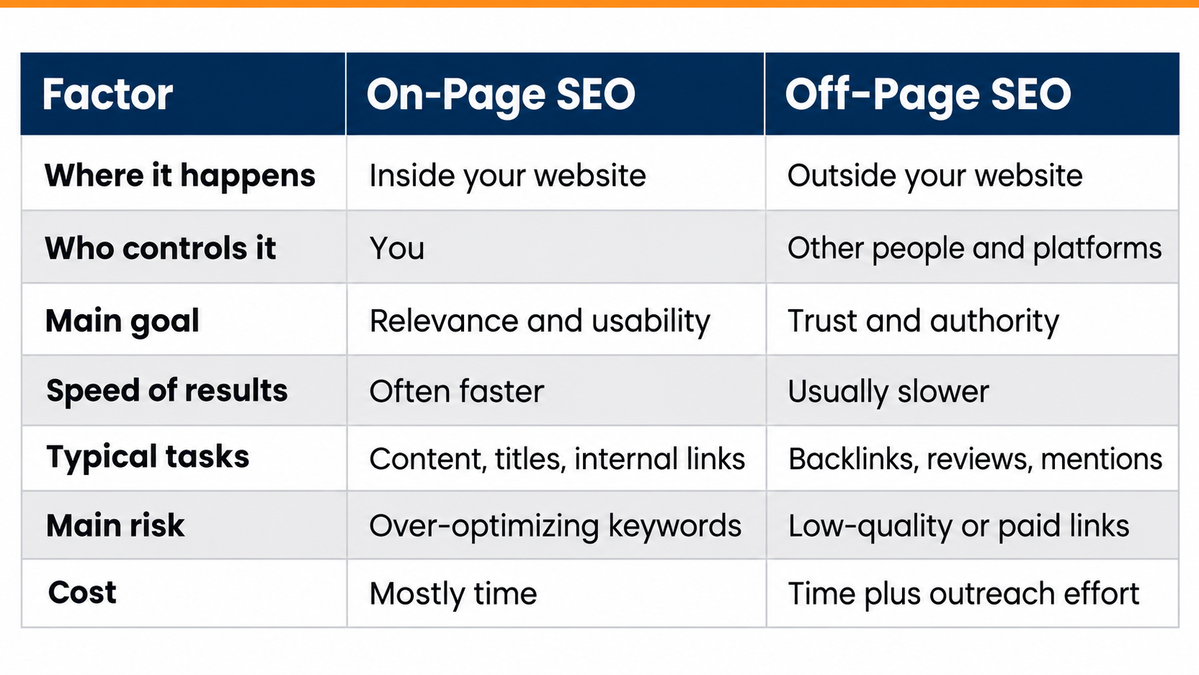
Here is the difference between on-page and off-page SEO side by side.
| Factor | On-Page SEO | Off-Page SEO |
|---|---|---|
| Where it happens | Inside your website | Outside your website |
| Who controls it | You | Other people and platforms |
| Main goal | Relevance and usability | Trust and authority |
| Speed of results | Often faster | Usually slower |
| Typical tasks | Content, titles, internal links | Backlinks, reviews, mentions |
| Main risk | Over-optimizing keywords | Low-quality or paid links |
| Cost | Mostly time | Time plus outreach effort |
On-Page and Off-Page SEO Examples
Examples make this clearer.
On-page example
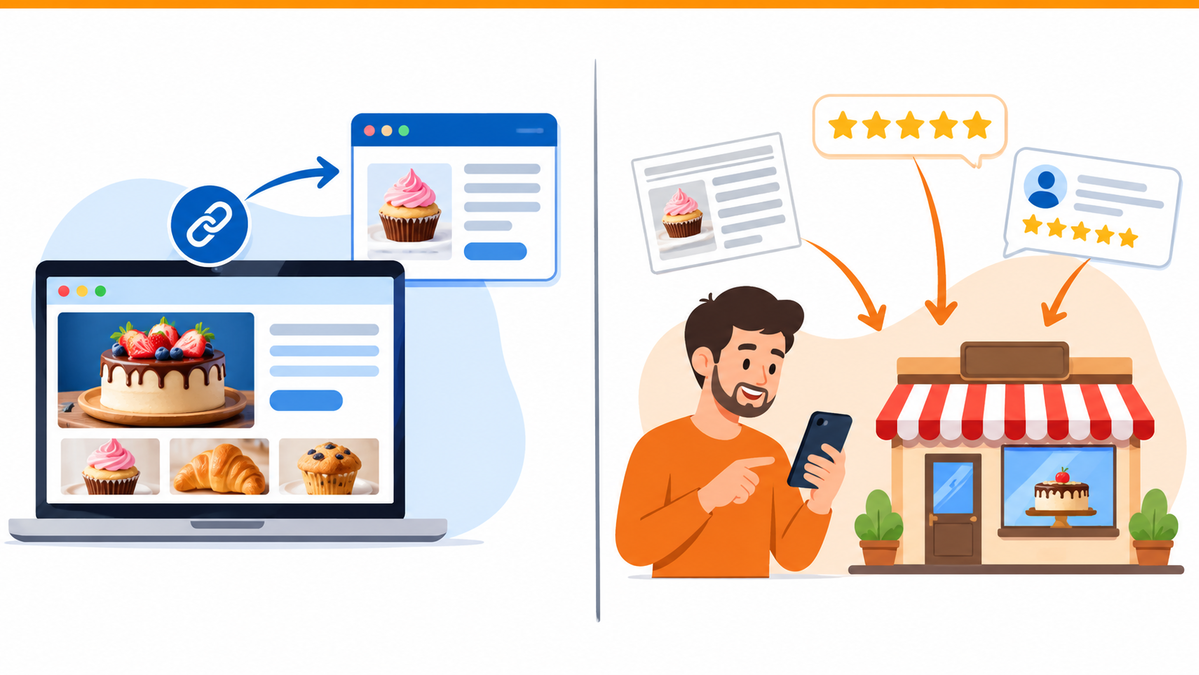
You run a bakery in Lahore.
Your cake page has a vague title, no images, and no internal links.
You rewrite the title, add real photos, answer common questions, and link to it from your homepage.
Everything you did is on your site.
That is on-page SEO.
Off-page example
A food blogger writes about your bakery and links to your cake page.
A local newspaper lists you in a “best bakeries” article.
Customers leave 40 genuine reviews.
You did not edit your website at all.
That is off-page SEO.
Off-Page SEO Checklist and Tools
Checklist
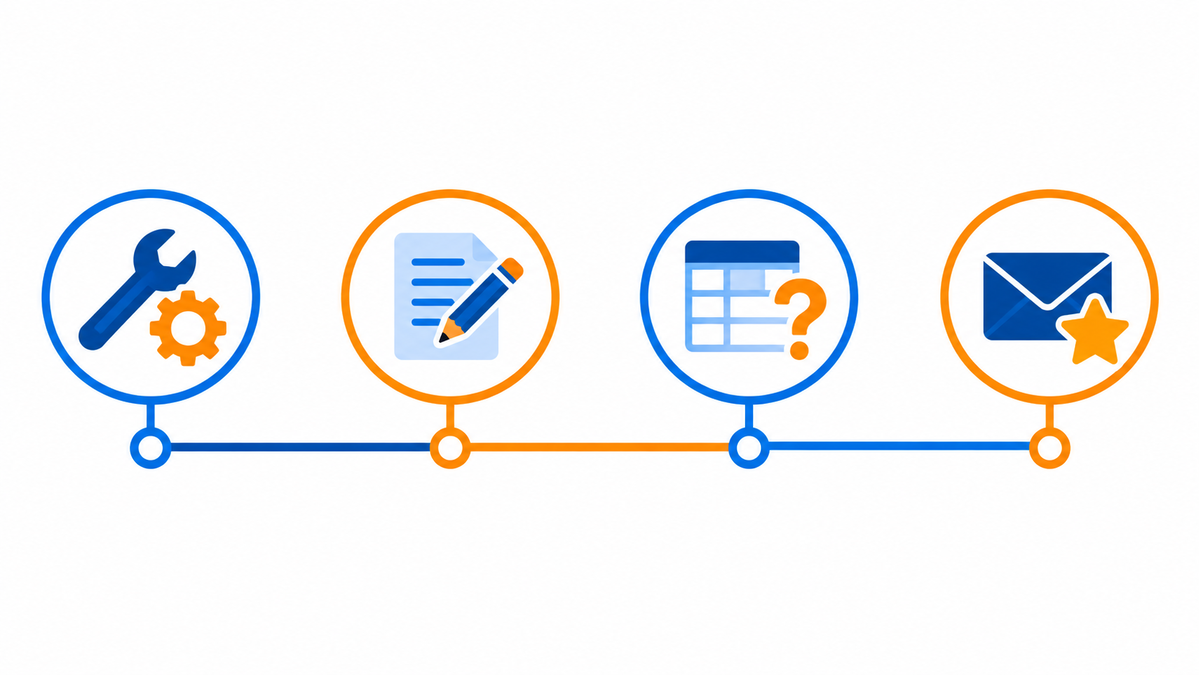
Use this before you start any campaign:
- Your on-page and technical basics are fixed first.
- You have one page worth linking to, such as a guide, tool, or study.
- You know which three competitors rank for your keyword.
- Your Google Business Profile is complete.
- You have a list of 20 relevant sites to approach.
- You check your backlink profile monthly.
Tools
- Google Search Console: Free. Shows who links to you and which queries bring clicks.
- Ahrefs and Semrush: Paid. Useful for backlink and competitor research.
- PageSpeed Insights: Free. Tests speed and mobile experience.
- Google Business Profile: Free. Manages local listings and reviews.
5 Mistakes I See Again and Again
After years of auditing sites, the same errors keep showing up.
1. Building Links Before Fixing the Page
Owners rush to buy links because it feels like progress.
But a weak page with strong links still ranks poorly.
Fix the page first.
2. Using One Keyword on Every Page
When two pages target the same keyword, they compete with each other.
Give each page one clear topic.
3. Ignoring Search Intent
A page can have perfect titles and still fail.
If people want a guide and you give them a sales pitch, they leave.
4. Chasing Link Quantity
Ten relevant links beat a hundred random ones.
Ask one question before any outreach: would this site’s readers actually care about my page?
5. Never Updating Old Content
Pages lose rankings slowly when they go out of date.
Refresh your best pages every six months.
Add new examples, remove dead links, and update the date only when the content truly changed.
A Simple 30-Day Plan to Apply Both
You do not need a big budget to start.
Use this plan for one important page.
- Week 1: Check indexing, speed, and mobile layout. Fix any technical blockers.
- Week 2: Rewrite the title, headings, and intro. Add internal links from three related pages.
- Week 3: Add examples, a comparison table, and an FAQ section.
- Week 4: Contact 15 relevant sites, ask for brand mention links, and request reviews from recent customers.
Track impressions and clicks in Search Console each week.
If clicks rise after week two, your on-page work is paying off.
If they stay flat, the page likely needs more authority from outside.
Which Is More Important: On-Page or Off-Page SEO?
Neither wins alone.
But the order matters.
A strong backlink to a weak page is wasted.
A great page with no links often sits on page two.
Use these signals to decide where to focus:
- Impressions are high, but clicks are low: Fix titles and descriptions first.
- Content is strong but stuck on page two: You likely need off-page authority.
- Pages are not appearing at all: Check technical SEO and indexing.
- Rankings dropped after an update: Review content quality and your link profile.
This simple diagnosis saves months of guessing.
Need Expert Help? SEO Services by Alphabl in Lahore and Sialkot
Knowing the theory is easy.
Applying it to your own business takes time and experience.
Alphabl helps businesses fix on-page, technical, and off-page SEO in the right order.
We audit your site, find what holds your pages back, and build a plan around your market.
If you are in Punjab, our local teams are ready to help.
- Looking for SEO Services in Lahore? We help local businesses rank where their customers search.
- Need an SEO Expert in Sialkot? We support manufacturers, exporters, and service providers.
Visit Alphabl to book a free review of your website.
Final Thoughts
The difference between on-page and off-page SEO is simple.
On-page SEO is what you do on your website to make it clear and useful.
Off-page SEO is what the web says about you.
You need both, but start with technical and on-page fixes.
Then use off-page work to build trust.
Check your Search Console data this week and choose one issue to fix.
Understanding the difference between on-page and off-page SEO is only the first step.
Consistent action is what moves rankings.
Frequently Asked Questions
What are the four types of SEO?
The four main types are on-page SEO, off-page SEO, technical SEO, and local SEO.
Some guides add content SEO as a fifth type.
What does off-page SEO mean?
Off-page SEO means actions taken outside your website to build trust.
The biggest ones are backlinks, brand mentions, and reviews.
What is the 80/20 rule in SEO?
It suggests that about 20% of your efforts produce 80% of your results.
In practice, a few key pages and a few strong links usually drive most of your traffic.
Find those pages first and improve them before creating new ones.
Is SEO dead now with AI?
No.
AI answers still pull from trusted, well-structured pages.
Clear content and real authority matter more than before, not less.

Habib Ur Rehman is the Founder and CEO of Alpha BL, specializing in Digital Marketing and SEO.